3 AM. Deployment failed. No rollback plan. The staging server looks nothing like production. If you have been in this situation — or dread ending up there — you need to understand how a CI/CD pipeline works. It is the single most important system that separates chaotic manual deployments from smooth, automated software delivery.
What Is a CI/CD Pipeline?
A CI/CD pipeline is an automated workflow that takes your code from commit to production. CI stands for Continuous Integration — automatically building and testing every code change. CD stands for Continuous Delivery or Continuous Deployment — automatically releasing validated code to staging or production environments.
Think of it like an assembly line in a factory. Raw materials (your code) enter one end, pass through quality checks (automated tests), and come out the other end as a finished product (deployed application). Every step is automated, repeatable, and fast.
Without a CI/CD pipeline, teams rely on manual builds, manual tests, and manual deployments. This leads to human errors, inconsistent environments, and releases that everyone dreads.
Why Does a CI/CD Pipeline Matter for DevOps?
Speed and reliability are the two biggest reasons every DevOps team builds a CI/CD pipeline. According to the 2024 State of DevOps Report by Puppet, elite-performing teams deploy 973 times more frequently and recover from incidents 6,570 times faster than low performers. The difference? Automated pipelines.
Here is what a well-built pipeline gives you:
Faster feedback loops. Developers know within minutes if their code broke something. No more waiting days for a QA team to manually test changes.
Consistent environments. The same build runs in development, staging, and production. The “it works on my machine” excuse disappears.
Reduced risk. Small, frequent releases are easier to debug than large, monthly deployments. If something breaks, you roll back one small change — not hundreds.
Team confidence. When deployments are automated and tested, releasing on a Friday afternoon stops being terrifying.
How a CI/CD Pipeline Works — Step by Step
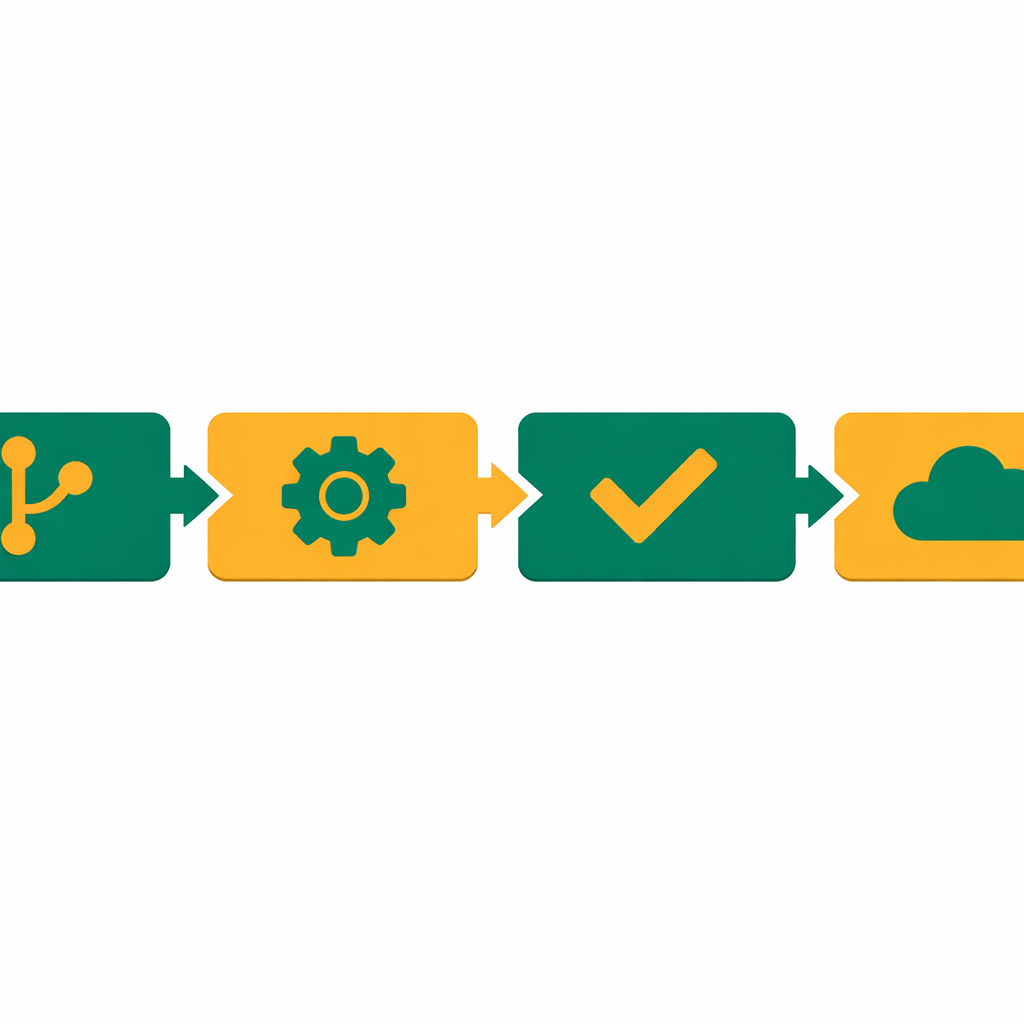
Every CI/CD pipeline follows a four-stage pattern. The details vary by tool and team, but the core flow stays the same.
Stage 1 — Source. A developer pushes code to a shared repository like GitHub, GitLab, or Azure Repos. This push triggers the pipeline automatically. Most teams use branch protection rules so that code must pass the pipeline before it merges into the main branch.
Stage 2 — Build. The pipeline compiles the code, resolves dependencies, and packages the application. For containerized apps, this means building a Docker image. The build stage catches syntax errors, missing dependencies, and compilation failures.
Stage 3 — Test. Automated tests run against the built application. This includes unit tests (testing individual functions), integration tests (testing how components work together), and sometimes security scans. If any test fails, the pipeline stops and notifies the team immediately.
Stage 4 — Deploy. Validated code moves to a staging environment first. After final checks — sometimes including manual approval — it reaches production. Teams practicing full Continuous Deployment skip manual approval and push directly to production after all automated checks pass.
name: CI/CD Pipeline
on:
  push:
    branches: [main]

jobs:
  build-and-test:
    runs-on: ubuntu-latest
    steps:
      - uses: actions/checkout@v4
      - name: Install dependencies
        run: npm install
      - name: Run unit tests
        run: npm test
      - name: Build application
        run: npm run build

  deploy:
    needs: build-and-test
    runs-on: ubuntu-latest
    steps:
      - name: Deploy to staging
        run: echo "Deploying to staging..."
      - name: Run smoke tests
        run: echo "Running smoke tests..."
      - name: Deploy to production
        run: echo "Deploying to production..."
Popular CI/CD Pipeline Tools in 2026
Choosing the right tool depends on where your code lives and what cloud platform you use. Here are the top options that dominate the market right now.
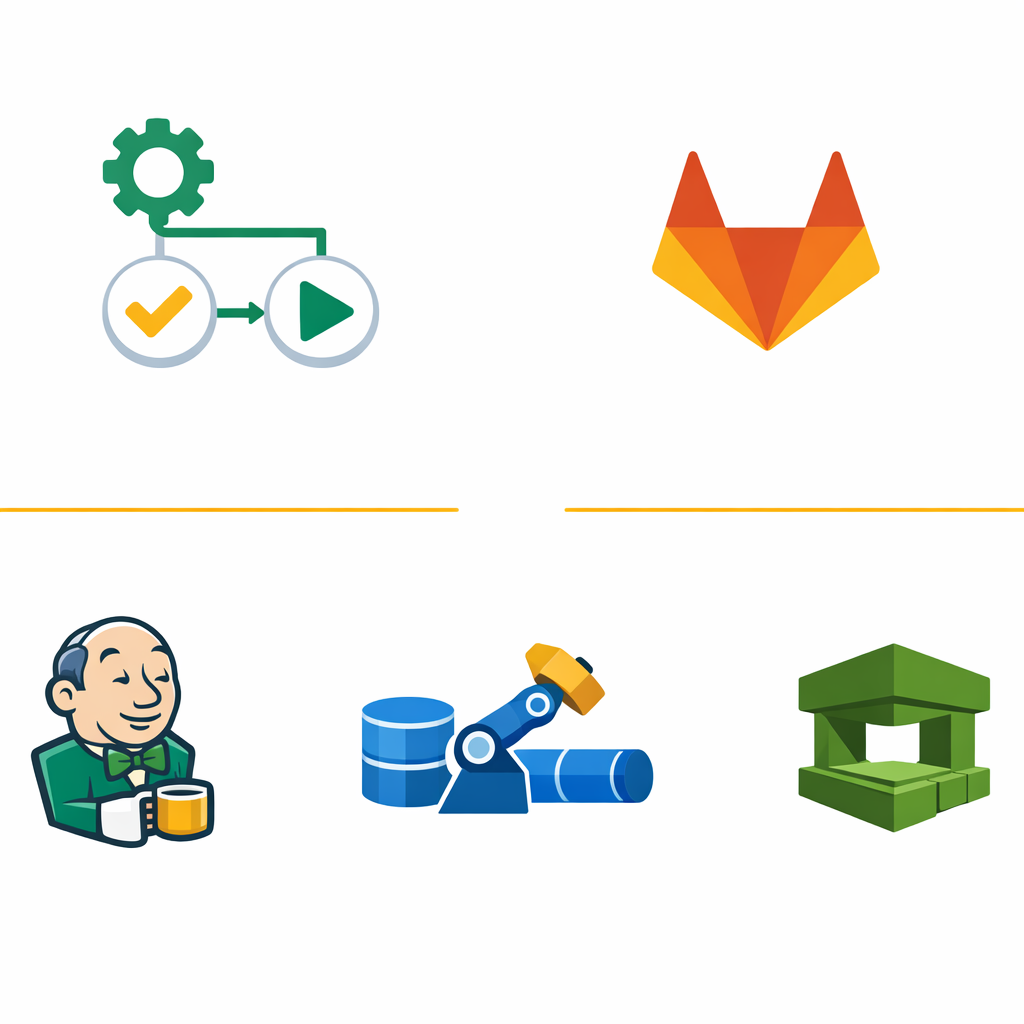
GitHub Actions has become the default for most teams in 2026. If your code lives on GitHub, Actions integrates seamlessly with no external systems to manage. The YAML-based workflow syntax is clean, the marketplace offers thousands of pre-built actions, and setup takes minutes.
GitLab CI/CD is a strong choice if you use GitLab for source control. It offers slightly more built-in features for complex pipelines, including built-in container registry and security scanning.
Jenkins is the veteran. It is incredibly flexible and supports almost any workflow through plugins. The trade-off is complexity — Jenkins requires more setup, maintenance, and infrastructure management compared to cloud-native options.
Azure Pipelines fits perfectly into Microsoft ecosystems. If you work with Azure cloud services, Azure DevOps gives you a tight integration between your repos, boards, and pipelines.
AWS CodePipeline works best for teams already on AWS. It connects natively to CodeBuild, CodeDeploy, ECR, ECS, and Lambda for a fully AWS-native CI/CD experience.
6 CI/CD Pipeline Mistakes Every Beginner Makes
Building your first pipeline is exciting, but these common mistakes can turn that excitement into frustration fast. Here is what to watch for.
A pipeline without automated tests is just an automated deployment script. You are shipping bugs faster, not better software.
Never put API keys, passwords, or tokens directly in your pipeline file. Use your platform’s secrets manager — GitHub Secrets, Azure Key Vault, or AWS Secrets Manager.
If your deployment breaks production and you have no way to revert, your pipeline is incomplete. Always plan how to undo a bad release.
Skipping staging environments means your first tester is your end user. Always validate in a staging environment before going live.
A pipeline that takes 45 minutes to run kills developer productivity. Cache dependencies, parallelize tests, and keep pipelines under 10 minutes.
Deployment is not the finish line. Without post-deploy monitoring and alerts, you will not know if your release caused problems until users complain.
CI vs CD — What Is the Actual Difference?
Many beginners use CI and CD interchangeably, but they solve different problems.
Continuous Integration (CI) focuses on the development side. Every time a developer pushes code, the system automatically builds and tests it. The goal is to catch integration issues early — before broken code reaches the main branch.
Continuous Delivery (CD) picks up where CI ends. After code passes all tests, CD keeps it in a deployment-ready state. A human still clicks the “deploy” button for production releases.
Continuous Deployment goes one step further. There is no manual approval gate. Code that passes all automated checks goes straight to production. This requires a very mature testing suite and strong monitoring.
Most teams start with CI, then add Continuous Delivery, and only move to full Continuous Deployment after building confidence in their test coverage and monitoring.
How to Build Your First CI/CD Pipeline
You do not need a complex setup to get started. Here is a practical path for beginners.
Step 1 — Start with version control. Push your project to GitHub. If you do not use Git yet, learn the basics of commits, branches, and pull requests first.
Step 2 — Write at least one test. Even a single unit test gives your pipeline something to validate. A pipeline with zero tests adds no quality guarantee.
Step 3 — Create a workflow file. For GitHub Actions, add a YAML file in the .github/workflows/ directory. Define your trigger (push to main), build steps, and test steps.
Step 4 — Add a staging deployment. Deploy to a free-tier cloud service or a simple hosting provider. Verify the deployment works before adding production targets.
Step 5 — Add notifications. Configure Slack or email alerts so you know immediately when a pipeline fails. Silent failures are the most dangerous kind.
Step 6 — Iterate and improve. Add more tests. Cache dependencies to speed up builds. Add security scanning. Your pipeline is a living system — treat it like product code.
CI/CD Pipeline Skills and Your DevOps Career
If you are preparing for a DevOps role, CI/CD pipeline knowledge is non-negotiable. Almost every DevOps job description in 2026 lists CI/CD experience as a core requirement.
Understanding pipelines also connects directly to other skills employers want — containerization with Docker, orchestration with Kubernetes, infrastructure as code with Terraform, and cloud platforms like AWS and Azure.
From my training experience, the students who build real pipelines for personal projects stand out in interviews. Reading about CI/CD is not enough. Set up a GitHub repo, write a workflow, break it, fix it. That hands-on experience is what hiring managers look for.
Master DevOps with Hands-On Training
Bhanu Prakash teaches DevOps, AWS, and Azure with real-world labs and pipeline projects. Build the skills that hiring managers actually test for.
Official Resources
- GitHub Actions Documentation
- Azure Pipelines Documentation — Microsoft Learn
- AWS CodePipeline Documentation