
Home /
Blog / Generative Engine Optimization
In fact, generative engine optimization is quickly becoming a key skill for online marketers in 2026. in detail, this complete guide covers all you need to know about generative engine optimization tips, tools, and techniques.
What Is GEO? The New SEO Skill Every Marketer Needs in 2026
February 23, 2026 10 min read
Bhanu Prakash
In short, Generative Engine Optimization (GEO) is about boosting your website content. Basically, the goal is to get cited by AI search engines. In fact, these include Google AI results, ChatGPT, Perplexity, and Gemini. Ultimately, this goes beyond standard SEO to help your content appear in AI-made answers.
What Is Generative Engine Optimization (GEO)?
Here is why this matters. Naturally, Generative Engine Optimization. GEO. is the practice of making your content more likely to be cited, quoted, or best by AI-driven search systems. Instead of boosting for Google’s ranking system, you improve for the AI models that now answer user questions right.
For example, think about how you search today. For instance, you open ChatGPT and type “best cloud certs for beginners.” ChatGPT doesn’t show you ten blue links. Instead, it gives you a direct answer — often citing exact sources. Also, if your website isn’t one of those sources, you don’t exist for that user. Moreover, that’s the GEO problem in one sentence.
Key Concept: standard SEO makes your page rank high in search results. In contrast, GEO makes your content trusted enough that AI models quote it when answering user questions — without the user ever clicking to your site.
In fact, the platforms driving this shift include Google AI results, ChatGPT (with browsing enabled), Perplexity AI, Microsoft Copilot, and Gemini. Altogether, these tools handle hundreds of millions of queries every day. also, and they’re pulling answers from content that follows very exact structural and trust signals.
GEO vs SEO: What’s Actually not alike?
Here is why this matters. Indeed, this is the question I get most often from working experts moving into digital sales roles. Surely, both GEO and SEO want your content to be found — but the mechanism is fully not alike.
| Factor | standard SEO | GEO (2026) |
|---|---|---|
| Goal | Rank on page 1 of Google | Be cited by AI models |
| Primary metric | Click-through rate | AI cite rate |
| Content structure | Keywords + backlinks | trust + schema + clarity |
| User journey | Search Click Read | Ask AI Get answer Done |
| Traffic model | Visit-based | reach-based (zero-visit) |
| Key signals | Domain trust, page speed | skill, cites, structure |
Most above all, what is the biggest shift? Basically, With SEO, success meant getting someone to your website. On the other hand, with GEO, success means being the source an AI quotes. Even if the user never visits you. In fact, as a result, this changes how you measure value entirely.
Exam Alert: If you’re studying for digital sales certs in 2026, expect GEO, AI results, and zero-click search to appear in exams. Evidently, these are no longer new concepts — they’re current field standard.
Why Generative Engine Optimization Matters in 2026?
Here is why this matters. Certainly, the numbers tell the story. Of course, Google now runs over 5 trillion searches per year. But click-through rates dropped to low levels in 2025 because AI results answer questions right on the results page. Indeed, perplexity’s user base grew 4x in 2025. Also, ChatGPT search crossed 1 billion weekly queries.
As a result, brands that adapted early are seeing something counterintuitive: their website traffic dropped. Their brand mentions and lead quality went up. in detail, when an AI tells a user “according to [your brand]. The best approach is X,” that tip carries far more trust than a blue link the user has to judge themselves.
Also, For anyone pursuing a career in digital sales. or running a business. skipping GEO in 2026 is like skipping mobile optimization in 2015. Surely, you can delay it, but the cost of catching up later gets higher every month.
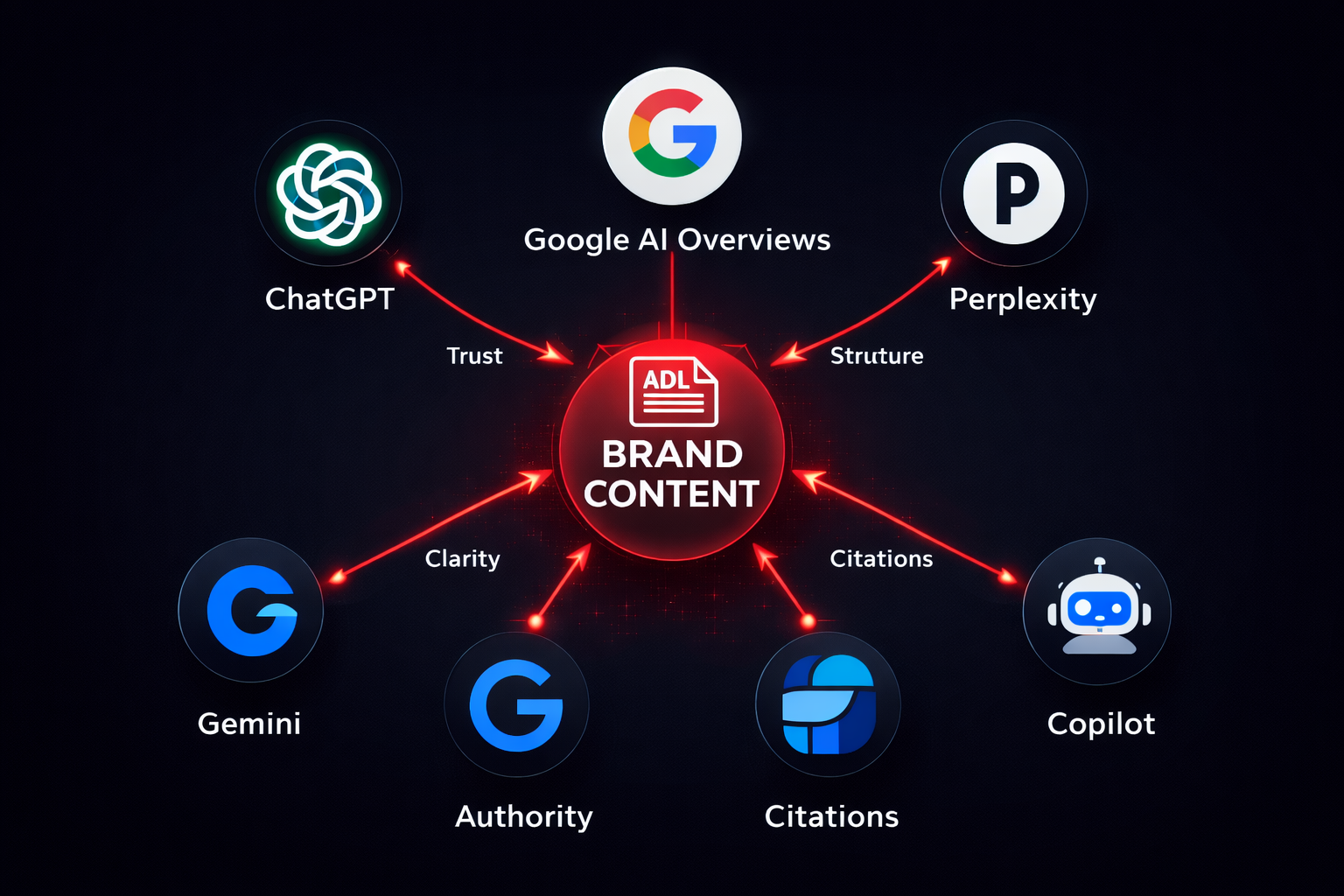
How AI Models Use Generative Engine Optimization Signals
Here is why this matters. In fact, grasp this is the heart of GEO. However, aI models don’t rank content the same way Google does. Instead, they judge content for a mix of factors that fall into three groups: trustworthiness, clarity, and structure.
Trustworthiness Signals
Also, AI models learn from vast datasets and learn which sources are reliable. So, in detail, your content earns trust signals through new data and research that can’t be found elsewhere. steady skill shown across multiple pieces of content, external mentions and cites from other credible sources. and author skills made explicit in the content itself.
Clarity Signals
Also, AI models need to pull out a clear answer for their users. For instance, content that buries the answer in five paragraphs of preamble gets skipped. Therefore, content that states the answer immediately, then supports it with evidence, gets cited. So, short paragraphs, direct sentences, and plain language outperform dense academic prose every time.
Structure Signals
Yet, Schema markup, clear HTML headings, FAQ sections. Definition-style explanations all help AI models parse and extract your content accurately. Meanwhile, a well-clear page is at its core pre-formatted for AI pulling. Also, this is why GEO demands that every H2 be a clear question or statement — not a clever headline.
Key Concept: Google’s own research shows that pages clear with clear brand relationships, FAQ schema, and expert authorship signals are greatly more likely to appear in AI results. This is GEO in practice — not theory.
7 Generative Engine Optimization tips to set up Right Now
Here is why this matters. These aren’t abstract ideas. Moreover, these are the exact actions that move the needle on AI cite rate in 2026.
1. Write for the AI’s User, Not for the system
Clearly, When someone asks an AI a question, it wants to give a clear answer. Likewise, it aims to be complete and correct. So write your content the same way. Therefore, answer the question in the first paragraph. Namely, use the rest of the article to support, expand, and prove that answer. In fact, stop writing for crawlers and start writing for the human the AI is trying to help.
2. Add Explicit Author skill
Also, AI models weight content from real experts more than unknown writers. Therefore, every post should include an author bio with skills. Also include years of use and relevant certs. In short, if you’re a trainer or consultant, say so explicitly in the content. Not just in a footer bio.
3. set up FAQ Schema on Every Page
FAQ sections right map to how AI models format answers. In fact, Add a FAQ section at the bottom of each post with FAQ schema markup. For example, tools like Rank Math and AIOSEO make this a two-minute job. Certainly, questions should mirror how real users phrase their queries in AI chat interfaces.
4. Create new Statistics and Data
Above all, AI models want to cite new data. Indeed, When you publish a survey, run your own study. Compile data in a new way, you become a citable source by default. Naturally, even small, niche-exact data points. like “70% of our students cleared AZ-104 in their first attempt”. give AI models something they can’t get anywhere else.
5. Structure Content with clear Headings
in detail, every H2 should be a complete thought that could stand alone as a search query. Obviously, “What Is GEO?” works. Clearly, “Introduction” doesn’t. Surely, aI pulling systems parse H2s and H3s to grasp your content’s structure. Still, Treat your headings like a table of contents that tells the AI exactly what each section covers.
6. Build steady brand trust
AI models judge your brand as an brand — not just individual pages. Also, steady mentions of your brand name, skill area. Location across your website, social media, YouTube, and third-party articles all reinforce your brand trust. Also, next, This is why content diversity across channels matters more than ever in 2026.
7. Earn Editorial cites from trusted Sites
When other credible articles cite your content, AI models see that as a strong trust signal. Moreover, the standard link-building playbook still has value. But the goal shifts from domain trust for Google rankings to cite trust for AI tips. Thus, Focus on earning mentions from field articles, not just generic backlink sources.

Common Generative Engine Optimization Mistakes Marketers Make
Treating GEO as “Just Updated SEO”GEO requires a deeply not alike content design. Changing a few keywords isn’t enough. Your entire content brief needs to be rebuilt around AI pulling patterns.
skipping Zero-Visit reachMarketers dismiss GEO because they don’t see traffic from it. But brand cites in AI answers build trust that converts at a much higher rate when users do eventually visit.
Writing for Search Volume AloneHigh-volume keywords that AI answers fully don’t drive clicks. GEO requires targeting queries where users need to visit a source for depth — tutorials, tools, case studies, and comparisons.
Skipping Schema MarkupFAQ, Article, HowTo, and Person schema are the structural signals AI models use to parse content. Skipping schema is leaving cite chances on the table every single day.
Generative Engine Optimization Tools to Measure and Improve Your results
Here is why this matters. The GEO tooling ecosystem is still young, but a few platforms have launched useful measurement capabilities in 2025 and early 2026.
Semrush AI Toolkit now includes a feature that shows how often your domain appears in AI-made answers. Ahrefs added AI results tracking to its SERP features report. BrightEdge launched a Generative Parser that shows how AI models interpret your page structure.
For content creation, tools like Clearscope and Surfer SEO are updating their systems to factor in GEO signals alongside standard keyword metrics. Even Google Search Console now shows AI Overview impressions separately. Track these weekly to see which pages are getting AI reach.
grasp these platforms connects right to broader cloud and technology trends reshaping every field in 2025 and beyond. AI-driven sales tools run on the same cloud systems that powers enterprise AI. Knowing both sides gives you a serious edge in any sales or tech role.
Generative Engine Optimization Skills and Career chances in 2026
Here is why this matters. Plus, The demand for marketers who grasp GEO is growing faster than the supply. also, companies that built their entire traffic model on SEO are scrambling to adapt. And they’re hiring people who can lead that transition.
Roles that in detail value GEO skill include Content plan Managers (who grasp AI content design). SEO Specialists moving to AI Search Optimization, Online Sales Analysts who can track AI cite metrics. and Brand Content Strategists who build brand trust across platforms.
If you’re considering a career pivot into digital sales. Grasp how the internet itself works gives you a foundation that makes GEO concepts click much faster. And if you’re curious how AI models power tools like ChatGPT and Gemini at a technical level. cloud computing systems is the layer underneath all you see.
Key Concept: GEO is not a replacement for content quality — it’s a framework for making high-quality content discoverable in an AI-first world. The fundamentals of good writing, genuine skill, and audience grasp still matter. GEO just changes how you package and structure them.
How Do You Get Started with Generative Engine Optimization Today?
Here is why this matters. The good news is that you don’t need to rebuild your entire website to start seeing GEO benefits. First, start with these three actions this week.
First, audit your top 10 existing posts and add an FAQ section to each one. In fact, use real questions from your audience — not keyword-stuffed phrases. Hence, Five genuine questions per post, answered in 2-3 sentences each. Is enough to start showing up in AI-made answer boxes.
Second, add Article schema and Person schema to your author pages. Indeed, if you use WordPress with AIOSEO or Rank Math, this takes about 20 minutes to configure site-wide. However, this single change can improve AI cite rates within 4-6 weeks of re-crawling.
Third, start tracking your AI Overview impressions in Google Search Console. Therefore, go to Search Results, click the “Search type” filter, and look for AI-exact impression data. So, set a baseline today so you have something to measure improvement against in 60 days.
Frequently Asked Questions
What is Generative Engine Optimization (GEO)?
GEO is the practice of boosting content to appear in AI-made search results from tools like ChatGPT, Google AI results. Perplexity. Meanwhile, it focuses on making content easily simple and citable by large language models.
How is GEO not alike from SEO?
SEO targets standard search engine rankings based on keywords and backlinks, while GEO targets reach in AI-made answers. Also, gEO emphasizes clear data, clear factual statements, and content that LLMs can easily extract and cite.
Why does GEO matter in 2026?
GEO matters because a growing percentage of search queries are now answered by AI systems instead of standard blue links. Likewise, websites that are not optimized for generative engines risk losing big organic traffic to AI-summarized results.
How do I improve my content for AI search engines?
Use clear headings, clear data markup, concise factual statements, and trusted cites. Namely, write content that right answers questions in a format that AI models can easily parse and quote.
Will GEO replace SEO?
No, GEO will not replace SEO but will complement it. In fact, standard SEO remains important for organic search reach. GEO adds a new layer of optimization for the growing AI-driven search landscape.
Want to Learn More About Online Sales?
Explore our digital sales articles covering SEO, GEO, content plan, paid ads, and AI-driven sales. In short, practical guides by Bhanu Prakash for marketers and IT experts.
Explore Our Online Sales Articles
Official Resources
- Google AI results — Developer Documentation
- Schema.org Article Markup quote
- WordStream — Content Marketing Trends 2026
- 10 Online Sales Trends for 2026 — Proceed Innovative