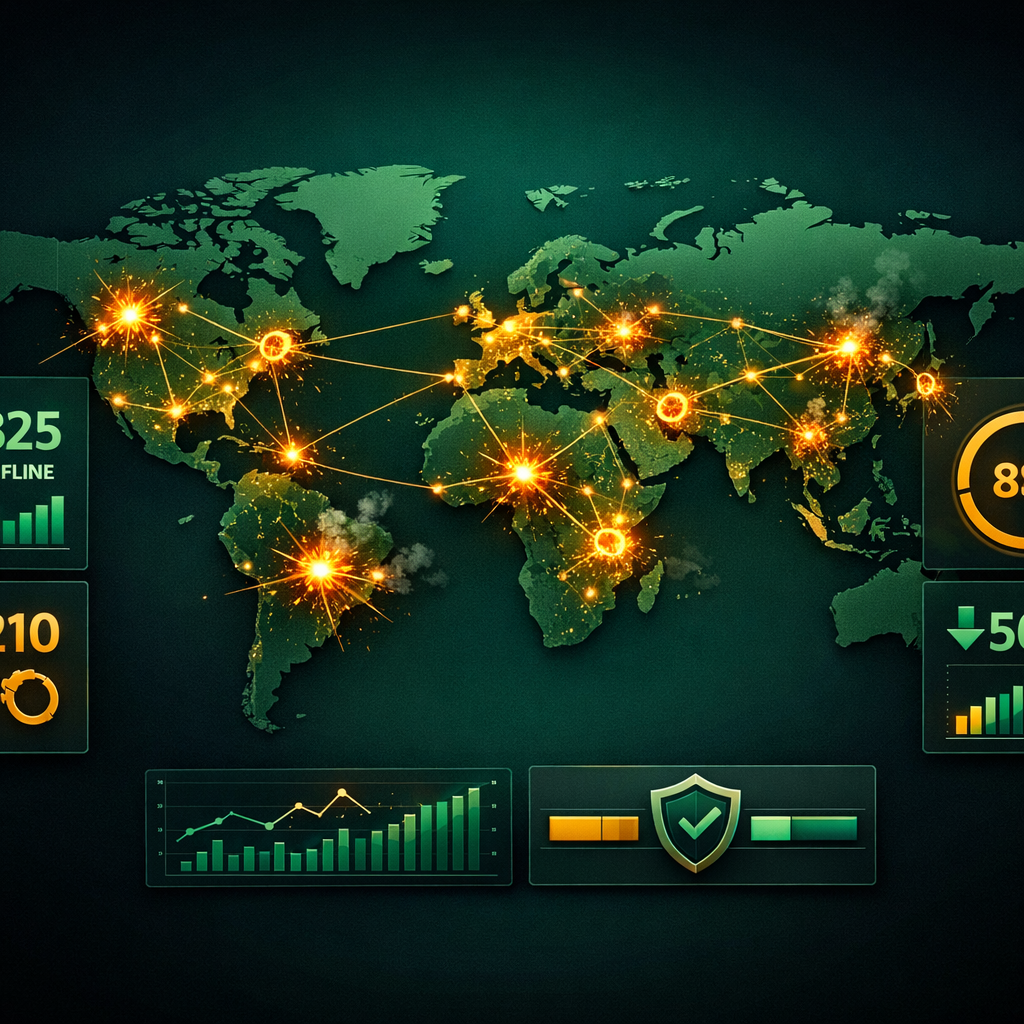
Operation Synergia III just became the largest cybercrime takedown of 2026 — with 45,000 malicious servers destroyed and 94 suspects arrested across 72 countries. INTERPOL led the effort, and the results show how fast cybercrime has scaled worldwide.
For IT students and security professionals, this operation is a case study in how global law enforcement fights back. Here's what happened, why it matters, and what you can learn from it.
What Is Operation Synergia III
Operation Synergia III is the third phase of INTERPOL's global cybercrime crackdown. It ran from July 18, 2025 to January 31, 2026. Police from 72 countries worked together to find and shut down servers used for phishing, malware, and ransomware.
The results were massive. Over 45,000 malicious IP addresses were taken offline. Authorities arrested 94 people and seized 212 electronic devices. Another 110 suspects are still under review.
This wasn't a quick raid. It took over six months of intelligence sharing, cross-border teamwork, and joint action between police and private security firms like Group-IB, Trend Micro, and S2W.
How Operation Synergia III Took Down 45,000 Servers
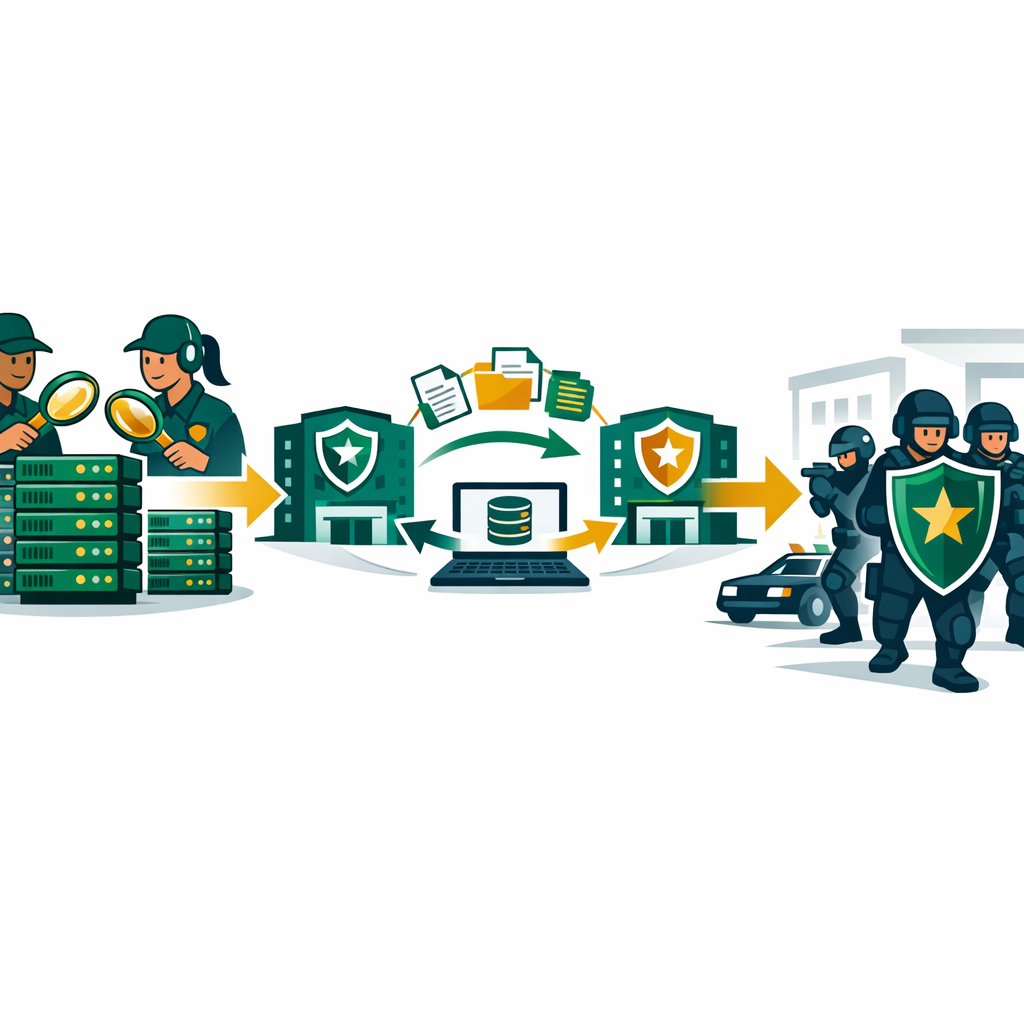
The operation followed a clear pattern. First, private security firms tracked malicious servers, domains, and IP addresses. Then INTERPOL turned that data into leads that local police could act on. Finally, national teams ran raids and seized hardware.
Here's how the biggest wins broke down by country:
Macao — 33,000+ Phishing Sites Identified
Police in Macao found over 33,000 phishing and fraud websites. These sites posed as banks, government portals, casinos, and payment services. Victims entered their personal data thinking they were on real sites. That data went straight to the attackers. Many of these sites used HTTPS and professional layouts, so they looked completely legitimate at first glance.
Bangladesh — 40 Suspects Arrested
Authorities in Bangladesh arrested 40 people and seized 134 electronic devices. The crimes ranged from loan scams and job fraud to identity theft and credit card stealing. Many of these schemes specifically targeted people looking for quick income online, especially young job seekers.
Togo — Fraud Ring Dismantled
In Togo, police arrested 10 members of a fraud ring that hacked social media accounts. Some ran romance scams, while others focused on sextortion. Each member had a different role — some were technical, others handled social tricks.
The Synergia Operations: How They've Grown
Operation Synergia III didn't come out of nowhere. INTERPOL has been building this program since 2023. Each phase has gotten bigger and more effective.
Synergia I (Sept–Nov 2023) was the proof of concept. It ran for just three months, however, it still led to 31 arrests and flagged 1,300 suspicious IPs. Small numbers, but it proved the model worked.
Synergia II (Apr–Aug 2024) scaled up fast. Over 95 countries took part, and as a result, police made 41 arrests and took down 22,000 malicious IPs. The focus was on phishing, ransomware, and info stealers.
Synergia III (Jul 2025–Jan 2026) doubled the numbers again. The takedown count jumped to 45,000+ IPs, arrests reached 94, and 72 countries sent teams. In other words, each phase of Operation Synergia III builds on lessons from the last.
Why This Matters for Cybersecurity Students
If you're studying for CEH, Security+, or any security cert, Operation Synergia III is packed with exam-relevant concepts.
Threat intelligence sharing is at the core of this operation. Private firms like Group-IB and Trend Micro tracked malicious servers and then shared that data with INTERPOL, which passed it to local police. This is the same "intelligence sharing" concept you'll see on CompTIA Security+ exams.
Incident response at scale is another key topic. Shutting down 45,000 IPs isn't like blocking one attack. It requires planning, coordination, and fast action across time zones. Think of it as incident response multiplied by 72 countries.
Phishing remains the #1 attack vector. Macao alone found 33,000 phishing sites. If you're learning about social engineering for CEH, this stat shows just how industrial phishing has become. It's not one hacker sending emails — it's factory-scale fraud. Because of this, learning to spot phishing is the most practical skill you can build right now.
Can Takedowns Really Stop Cybercrime
The short answer is: they help, but they don't solve the problem. Cybercrime groups rebuild fast. Taking down 45,000 IPs is a big win, however, experts say millions of malicious domains are active at any given time.
The real value of Operation Synergia III isn't just the numbers. Instead, it's the process. Each operation makes the intelligence pipeline faster. Police also get better at working across borders with every phase.
At the same time, attackers are getting faster too. Setting up new servers is cheap and quick. The cost of spinning up phishing sites is a fraction of what it costs to run a global police operation. So the fight is far from over.
Still, these operations send a clear message. Cybercrime isn't anonymous anymore. Even if you're in a different country, you can be tracked, identified, and arrested. For students, this also means there's a growing career path in cyber law enforcement and digital forensics.
Operation Synergia III led to 94 arrests across 72 countries. Law enforcement can trace digital activity across borders when they work together.
Macao found 33,000+ phishing sites in one operation. Phishing has become an industrial-scale threat, not a simple email trick.
Security+ and CEH exams test intelligence sharing models. Real operations like Synergia III are exactly what those questions are about.
Cybersecurity also includes law enforcement, policy, and global cooperation. A well-rounded understanding makes you more valuable in the job market.
How to Protect Yourself from Phishing and Malware
You don't need to be a security expert to stay safe. Here are five steps that block most common attacks.
Check URLs before clicking. Phishing sites look real, but the URL is always slightly off. Look for typos, extra characters, or unusual domains. If something feels wrong, don't enter your data.
Use a password manager. It won't autofill your credentials on a fake site because the domain won't match. That alone stops most phishing attacks.
Turn on two-factor auth (2FA). Even if an attacker steals your password, they can't log in without the second factor. Use an app-based method — not SMS, since SIM swapping is still a risk.
Keep your software updated. Many of the servers taken down in Operation Synergia III exploited known flaws. Patches fix those flaws. Don't delay updates.
Report suspicious sites. Every phishing site you report helps firms like Group-IB and Trend Micro map criminal setups. Your report could feed the next INTERPOL operation.
✅ https://mybank.com/login
❌ https://mybank-secure.com/login  ← extra word = fake
❌ https://myb4nk.com/login         ← number swap = fake
❌ https://mybank.com.phish.xyz/    ← extra domain = fake
Growing Career Path: Cyber Law Enforcement
Operation Synergia III also highlights a career path many students overlook — cyber law enforcement and digital forensics. Every country that took part needed trained analysts who could trace IP addresses, analyze seized devices, and build legal cases from digital evidence.
If you're interested in this path, start with certs like CEH or CompTIA Security+. Then explore digital forensics tools like Autopsy and FTK. Many police agencies now recruit directly from cybersecurity programs, so this is one of the fastest-growing areas in the field.
Even if you don't join law enforcement, understanding how these operations work makes you a better security professional. You'll know how threat intelligence flows, how incidents get traced, and why cooperation between private firms and police matters. These skills also show up on exams like Security+ and CEH.
In fact, INTERPOL itself runs training programs for cyber investigators. If you're building a career in this space, keep an eye on their offerings. The demand for skilled analysts is only going up, and operations like Operation Synergia III prove that governments are investing heavily in this fight.
Official Resources
- INTERPOL — Operation Synergia III Official Announcement
- CrowdStrike — March 2026 Patch Tuesday Analysis
- The Hacker News — INTERPOL Dismantles 45,000 Malicious IPs