

Indeed, the April 2026 Patch Tuesday just dropped one of the largest safety updates MS has ever released. Indeed, a total of 167 flaws got patches this month. This includes two zero-day flaws that hackers are already using in the wild. Therefore, if you manage Windows servers or devices, you need to rank first these updates right away. Notably, in my work working with IT security teams, clearly, delayed fixing is the number one reason firms get breached. Does that sound familiar?
Estimated reading time: 8 minutes
Key Takeaways
- 167 flaws patched - MS fixed 167 safety flaws in the April 2026 Patch Tuesday update, such as 8 rated urgent
- Two zero-day flaws addressed - CVE-2026-32201 (SP spoofing, now abused) and CVE-2026-33825 (guard access boost, openly disclosed)
- urgent RCE with CVSS 9.8 - CVE-2026-33824 affects Windows IKE Service and allows unknown remote code run with zero user action
- fast fixing required - firms running SP Server and Windows IKE should patch within 24 hours due to active abuse
Table of Contents
- April 2026 Patch Tuesday: Full look
- CVE-2026-32201: SP Attack in April 2026 Patch Tuesday
- Guard Flaw CVE-2026-33825 in April 2026 Patch Tuesday
- Urgent IKE RCE CVE-2026-33824 in April 2026 Patch Tuesday
- Patch Ranking Guide for April 2026 Patch Tuesday
- How to Apply April 2026 Patch Tuesday Updates
- Lessons for Safety Teams from April 2026 Patch Tuesday

April 2026 Patch Tuesday: Full look
Moreover, MS released safety updates for 167 flaws across Windows, Office, Azure, SP, and many other products on April 14, 2026. This makes the April 2026 Patch Tuesday one of the largest patches in recent memory. based on BleepingComputer, the breakdown includes 8 urgent and 159 key risk flaws.
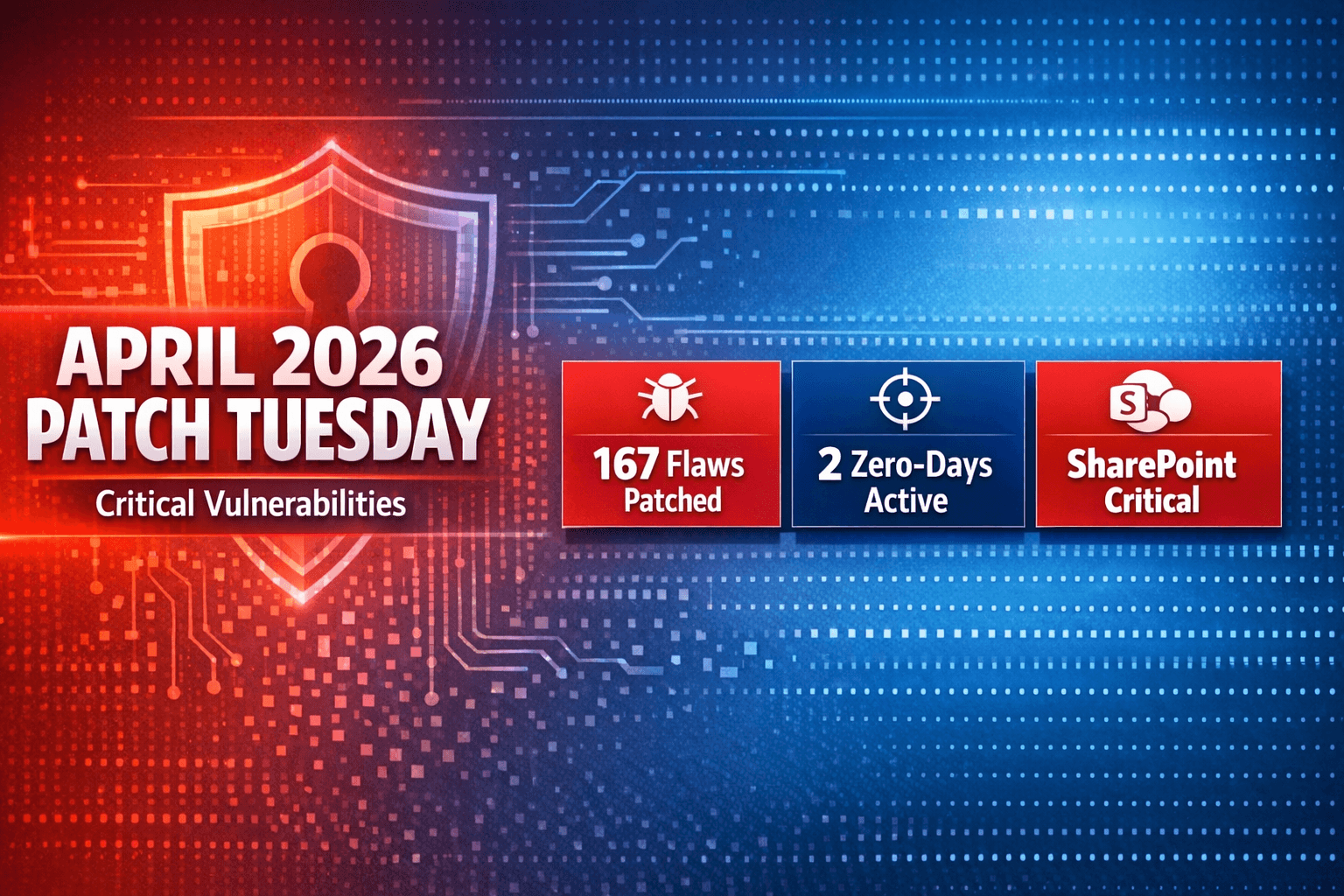
Furthermore, the flaw types span across remote code run, boost of access, info reveal, spoofing, denial of service, and safety feature bypass categories. Still, the April 2026 Patch Tuesday zero-day flaws demand your fast focus because hackers are not waiting for you to schedule a maintenance window.
Here is the risk breakdown that matters for your fixing top need. Remote code run flaws account for the highest risk, with 7 of the 8 urgent flaws falling into this type. The left urgent flaw is a denial of service flaw. For firms running SP Server, this month is mainly urgent.
Zero-Day CVE-2026-32201: SP Under Attack
in detail, CVE-2026-32201 is a spoofing flaw in MS SP Server that hackers are now using right now. based on Tenable, this flaw carries a CVSS score of 6.5 and allows unknown hackers to view private info and modify disclosed data.

Let me explain why a moderate CVSS score should still terrify you. The attack requires no user action and has low depth. An attacker who with ease exploits this flaw impacts both confidentiality and integrity of your SP setup. In short, they can read your internal files and change them without anyone noticing.
SP often stores private corporate data such as contracts, HR files, financial reports, and strategic plans. Thus, a spoofing flaw here is far more risky than its CVSS score suggests. Have you checked whether your SP instances are openly accessible?
based on safety Affairs, this is the only now abused flaw in this month's release. Consequently, firms running SP Server should treat this as a P1 emergency patch. Therefore, if you manage SP in your setup, apply this update before anything else on your list.
morely, our AWS VPC safety Best Practices guide explains similar network-level attack patterns that apply to on-premises SP rollouts.
Zero-Day CVE-2026-33825: guard access boost
keyly, CVE-2026-33825 is an boost of access flaw in MS guard with a CVSS score of 7.8 that was openly disclosed before MS released a patch. based on CrowdStrike, proof-of-concept exploit code already exists and MS assesses abuse as more likely.
Indeed, this flaw allows local hackers with low accesss to escalate their access by using insufficient access control granularity in guard. Moreover, this flaw appears to match a zero-day exploit. It is known as BlueHammer. A researcher using the alias Chaotic Eclipse posted the code to GitHub on April 3rd.
Here is the thing. When exploit code goes public before a patch exists, hackers have a head start. based on Zero Day Initiative, the window between public reveal and fixing is when most abuse happens. Indeed, security teams should rank first this update on all devices running MS guard.
Notably, the irony is not lost on safety professionals. The tool meant to protect your systems has a flaw that hackers can use to compromise them. Indeed, this is why defense-in-depth strategies matter. Never rely on a single safety layer. Our Trivy Supply Chain Attack guide covers similar cases where safety tools themselves become attack vectors.

urgent CVE-2026-33824: Windows IKE Remote Code run
CVE-2026-33824 is the most techly risky flaw in this month's release with a perfect storm CVSS score of 9.8. based on cyber News, this remote code run flaw affects the Windows Internet Key Exchange Service add-ons and requires zero login and zero user action.
really, an unknown attacker can exploit this flaw. They send specially crafted packets to any Windows machine with IKE version 2 enabled. The underlying flaw is a double free bug classified as CWE-415. Attack depth is low. This means automated abuse tools can be built quickly once the flaw details spread.
If your organization uses VPN connections that rely on IKEv2, every VPN gateway is maybe exposed. Furthermore, this flaw lets hackers run arbitrary code on the target system without needing any credentials. Of course, this is exactly the type of flaw that ransomware operators love to weaponize.
Despite its risk, this flaw is not yet being now abused. Yet with a CVSS of 9.8 and low attack depth, safety researchers expect abuse to begin soon. Also, any machine exposing IKE to the internet is a sitting target.
April 2026 Patch Tuesday: Patch ranking Guide
Not all April 2026 Patch Tuesday flaws need the same urgency level, so here is a practical ranking framework for your security team. Based on risk analysis from many sources, I suggest this fixing order for the April 2026 Patch Tuesday updates.
top need 1 (Patch within 24 hours): CVE-2026-32201 (SP zero-day, now abused) and CVE-2026-33824 (IKE RCE, CVSS 9.8). These two flaws pose the highest fast risk. Furthermore, SP is under active attack and the IKE flaw enables unknown remote code run.
top need 2 (Patch within 72 hours): CVE-2026-33825 (guard EoP, exploit code public) and the left 7 urgent flaws. Indeed, the guard flaw has public exploit code. Also, the other urgent RCE flaws could be weaponized quickly.
top need 3 (Patch within 7 days): All key risk remote code run and boost of access flaws. However, these require more complex attack chains. They still represent big risk.
top need 4 (normal patch cycle): info reveal, spoofing, and denial of service flaws rated key. Then, apply these during your next regular maintenance window. Still, do not skip them entirely.
Meanwhile, for firms that cannot patch right now, think of temporary fixs. First, restrict SP access to internal networks only. Second, disable IKEv2 on non-essential servers. Third, ensure guard definitions are updated to the latest version. Our Chaos Malware Cloud guide covers more defensive strategies for when fixing is delayed.
How to Apply These safety Updates
adding these safety updates follows the normal Windows Update process. However, large firms need a more strategic approach. Here is how to handle it efficiently whether you manage one machine or thousands.
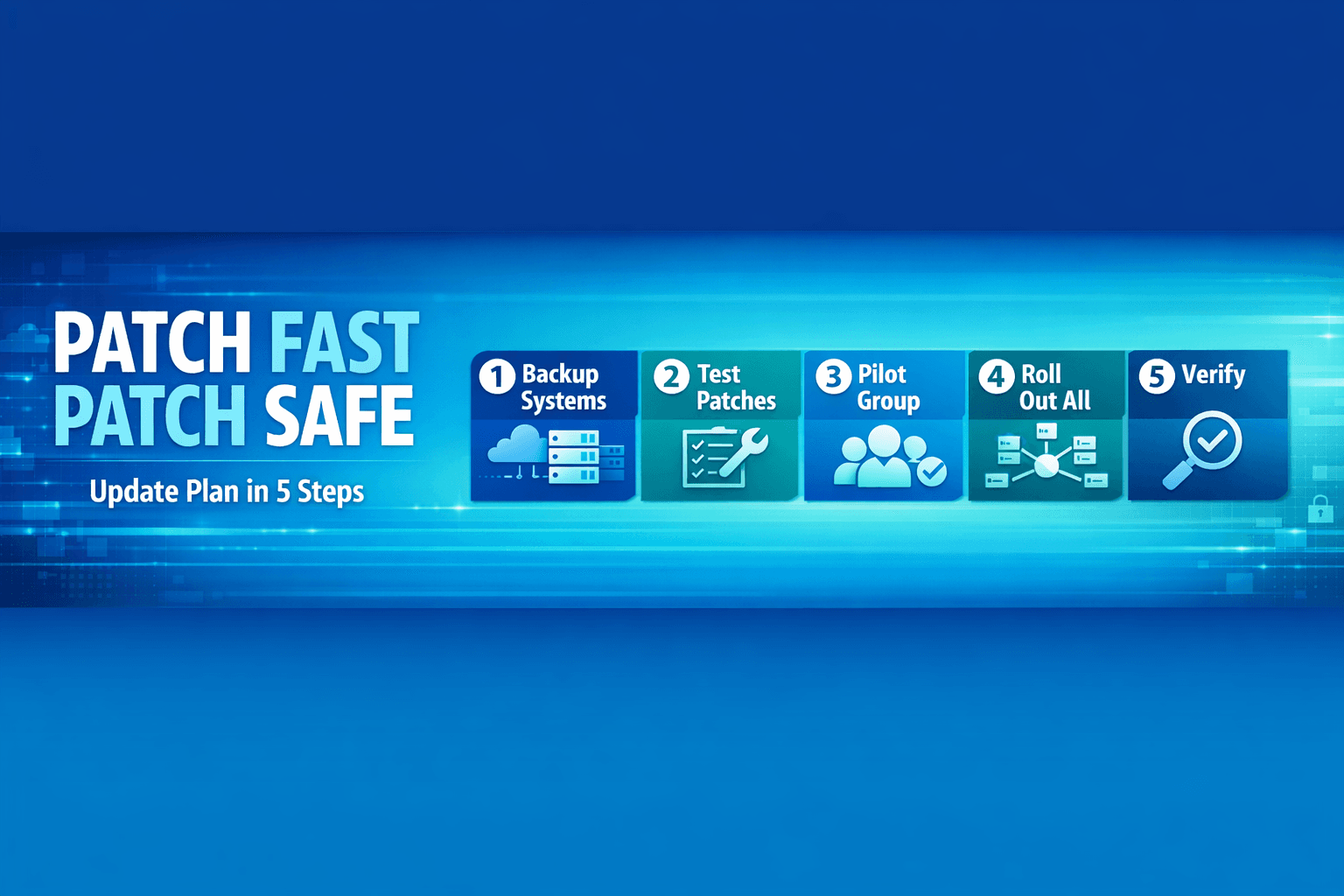
For individual machines: Open Windows Settings, navigate to Update and safety, and click Check for Updates. Windows will download and install the total update automatically. A restart is required to full the installation. Hence, save your work before starting.
For large setups: Use Windows Server Update Services (WSUS) or MS device setup Manager to stage and deploy updates. Test the total update on a pilot group of non-urgent systems first. Monitor for application compatibility issues for 4 to 8 hours before rolling out to production servers.
For SP Server in detail: Download the SP safety update from the MS Update Catalog. Back up your SP databases before adding the patch. Run the SP Products setup Wizard after installation to full the update. As a result, plan for a brief downtime window.
What would you do if a urgent system breaks after fixing? Always have a rollback plan. Create system restore points or VM snapshots before adding updates. Ultimately, the risk of fixing is almost always lower than staying unpatched. Still, preparation prevents panic.
April 2026 Patch Tuesday: Lessons for safety Teams
Every major update like the April 2026 Patch Tuesday teaches us something about the evolving threat landscape, and April 2026 is no exception. Notably, three key lessons stand out from the April 2026 Patch Tuesday's release that every safety professional should internalize.
First, moderate CVSS scores can hide urgent business impact. For example, the SP zero-day scored only 6.5. Yet it enables unauthorized access to your most private data. Likewise, always evaluate flaws in context. think of what they can access, not just their tech risk score.
Second, safety tools are not immune to flaws. Clearly, the MS guard access boost flaw reminds us that the tools we trust for protection can themselves become attack vectors. Defense-in-depth is not optional. Layer your safety controls so a single compromised tool does not bring down your entire defense posture.
Third, the window between reveal and abuse is shrinking. The BlueHammer exploit code appeared on GitHub 11 days before MS released a patch. exactally, hackers are watching the same reveal channels you are. Above all, build a fixing process that can respond to emergencies within hours, not weeks.
Check out our MCP Protocol Explained guide for more insights on how emerging technology protocols affect your safety posture. For broader cyber career guidance, our safety Plus SY0-701 guide covers the fundamentals every IT professional needs.
Summary
The April 2026 Patch Tuesday fixed 167 flaws such as two zero-days and a urgent CVSS 9.8 remote code run flaw. The now abused SP spoofing flaw (CVE-2026-32201) demands fast fixing. Similarly, the openly disclosed guard access boost (CVE-2026-33825) also needs urgent focus. firms should rank first SP servers and IKE-enabled systems first. Then, systematically work through the left urgent and key updates.
How many flaws did MS fix in April 2026 Patch Tuesday?
really, MS fixed 167 flaws in the April 2026 Patch Tuesday release. This includes 8 urgent and 159 key risk flaws. These span Windows, Office, SP, Azure, and other MS products. keyly, two of these are zero-days.
What are the zero-day flaws in April 2026 Patch Tuesday?
in detail, the two zero-days are CVE-2026-32201, a SP Server spoofing flaw now abused in the wild with a CVSS of 6.5, and CVE-2026-33825, a MS guard boost of access flaw with public exploit code and a CVSS of 7.8.
Should I patch right now or wait for testing?
For SP servers and systems with IKE enabled, patch within 24 hours due to active abuse and urgent risk. For other systems, test on a pilot group first but aim to full rollout within 72 hours for urgent flaws and 7 days for key ones.
What is CVE-2026-33824 and why is it risky?
CVE-2026-33824 is a urgent remote code run flaw in Windows IKE Service add-ons with a CVSS score of 9.8. It allows unknown hackers to run arbitrary code by sending specially crafted packets, needing no user action and no credentials.
Does the April 2026 Patch Tuesday affect Windows 10 and 11?
Yes, the April 2026 total updates affect both Windows 10 and Windows 11. The guard flaw impacts all Windows devices. The IKE flaw affects any Windows system with IKEv2 enabled. Apply updates through Windows Update or your large management tools.
Editorial reveal: This article was researched and drafted with AI assistance, then reviewed, fact-checked, and edited by Bhanu Prakash to ensure accuracy and provide hands-on insights from real-world work.
About the Author
Bhanu Prakash is a cyber and cloud computing professional with hands-on work in flaw management and safety operations. He shares practical guides and career advice at ElevateWithB.
What to Read Next: Check out our guide on Chaos Malware Cloud: How to Avoid These Mistakes Now.
Related Articles
- Chaos Malware Cloud: How to Avoid These Mistakes Now
- 10 Malicious AI Chrome add-ons: Mistakes You Must Avoid Now
- Trivy Supply Chain Attack: Secrets That Will Amaze You


